How Dental Design Services Fit Into a Modern Lab Workflow
Dental design services are increasingly becoming part of how modern dental labs manage fluctuating workloads, tight deadlines, and limited CAD capacity. In a modern dental CAD workflow, the challenge is not simply designing faster—it is keeping cases moving without sacrificing consistency or technician oversight. That is why dental CAD design outsourcing is increasingly considered a workflow option rather than an emergency measure.
Why Labs Add Dental Design Services
The case for dental design services usually begins with a familiar problem: experienced technicians spend too much time handling routine design work while complex cases continue to wait. Adding external design capacity can help laboratories absorb peak demand while allowing internal teams to focus on finishing, quality control, and cases that require greater technical judgment.
What Changes in a Dental CAD Workflow
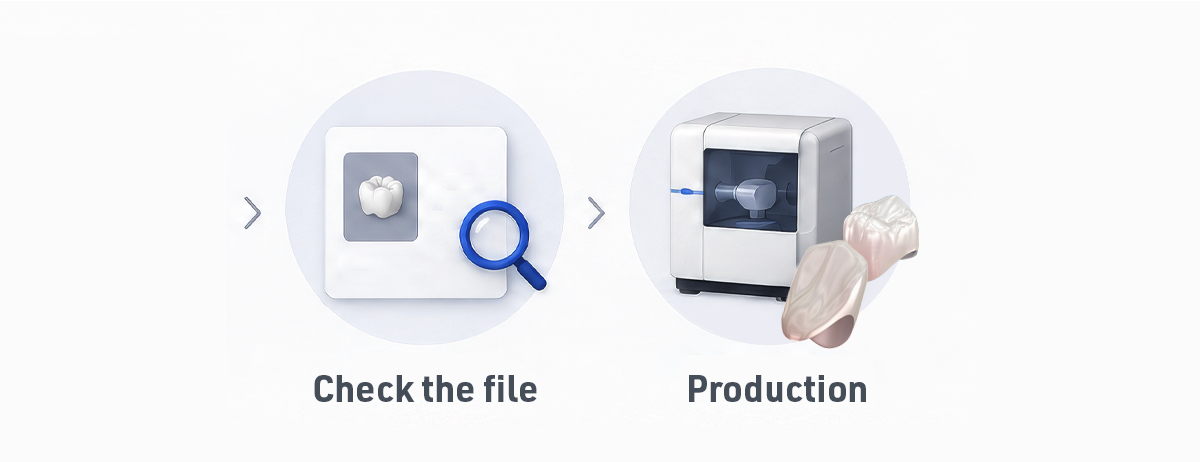
A reliable dental CAD workflow depends on clear case information, predictable file handling, and a defined review process. With dental CAD design outsourcing, the external designer should function as another stage in that process—not as a separate system. Well-structured dental design services can reduce bottlenecks when scan data, case specifications, review responsibilities, and revision procedures are clearly defined.
Making Dental CAD Design Outsourcing Practical
The biggest mistake in dental CAD design outsourcing is sending a case without enough context. Your dental CAD workflow should define what information accompanies each case, who checks the returned design, and how modifications are communicated. Standardizing these steps makes external design capacity easier to scale while keeping the laboratory in control of the final restoration.
Where AMDC Fits Into Dental Design Services
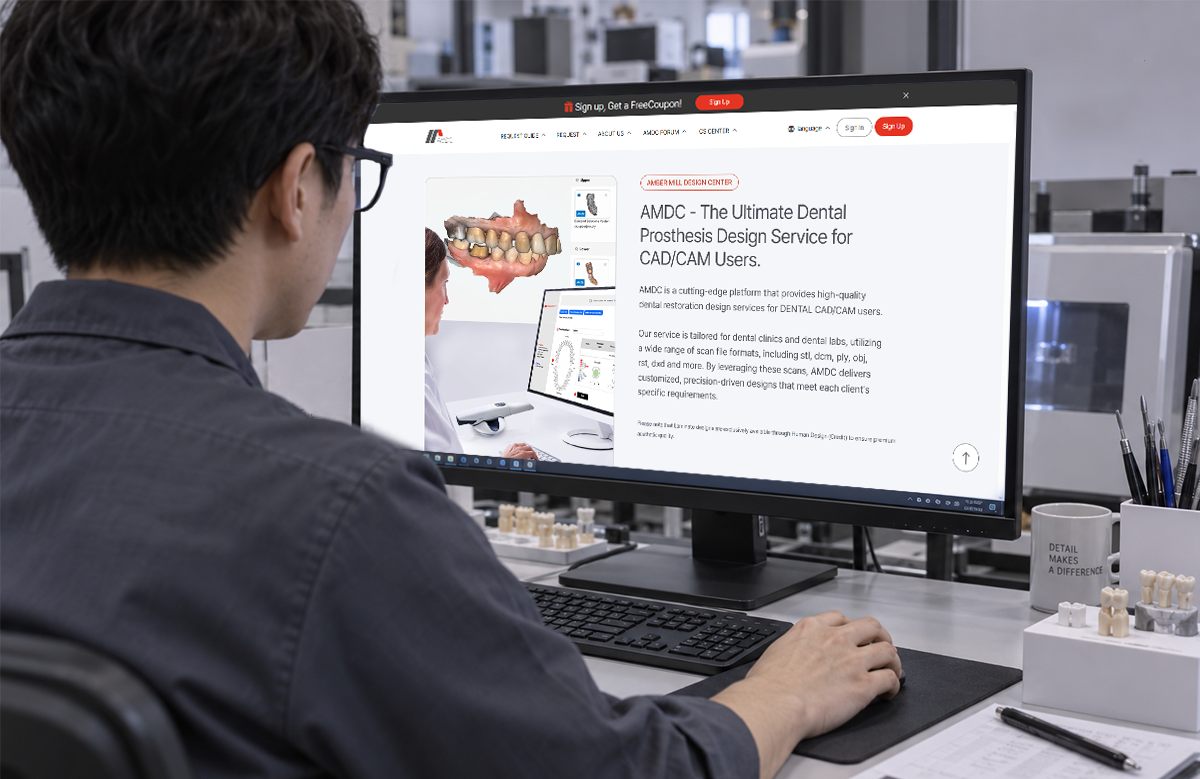
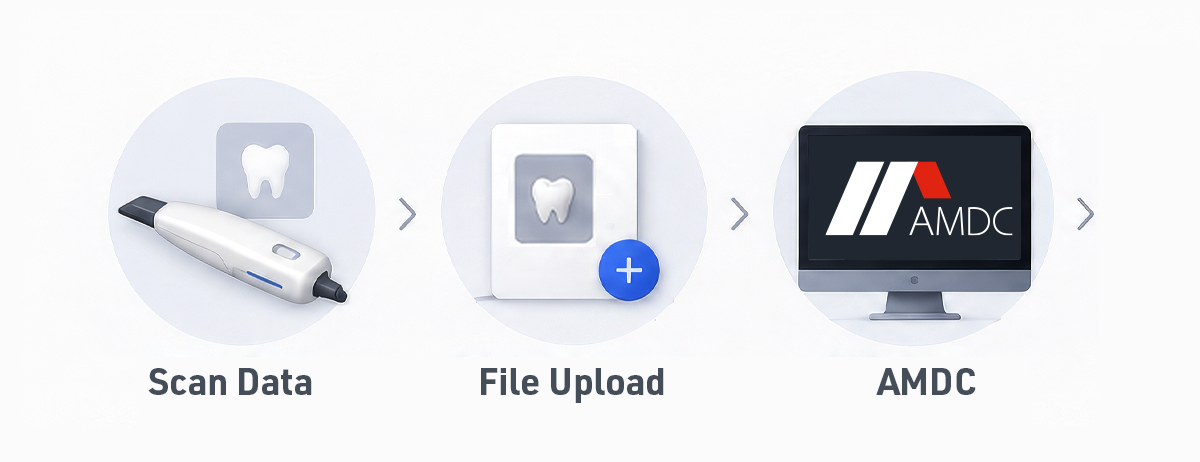
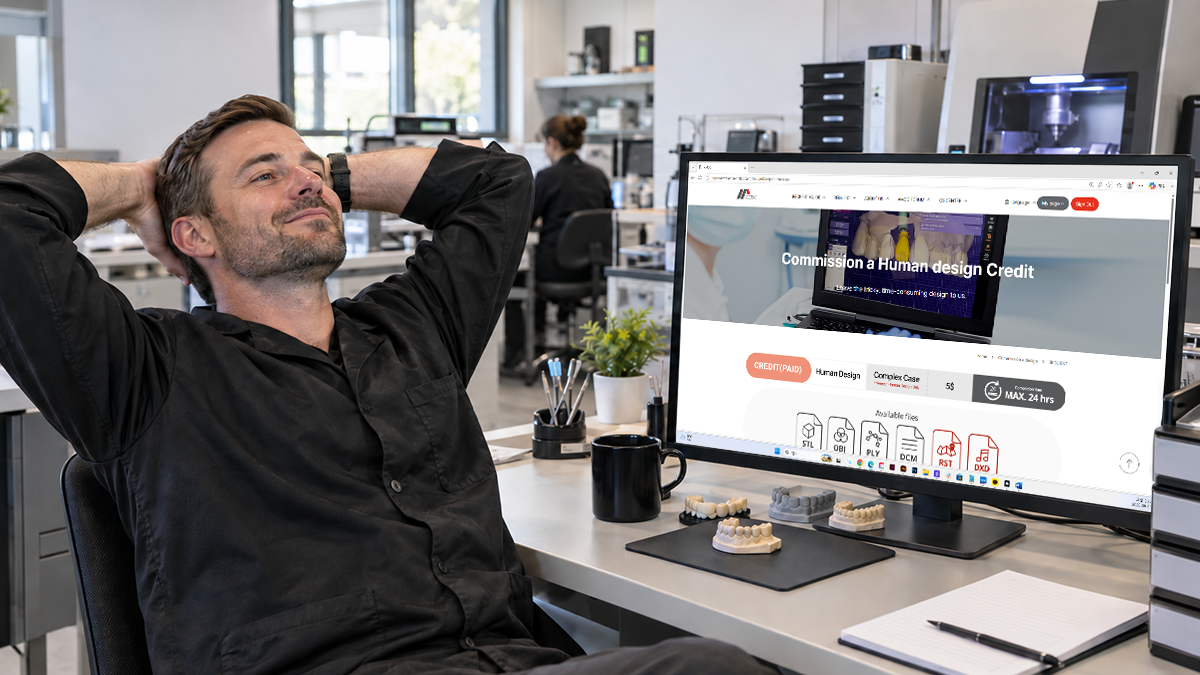
For laboratories considering dental CAD design outsourcing, platforms such as AMDC offer one example of how external capacity can be connected to a dental CAD workflow. AMDC allows users to submit patient scan data, select the prosthesis and tooth information, provide case requirements, review completed files, and request modifications. Its workflow includes both AI-based options for simple cases and human design for more complex cases. This makes AMDC relevant when evaluating dental design services as part of day-to-day capacity planning rather than simply outsourcing work when the lab is already overloaded.
Protect Capacity Without Losing Control
A strong dental CAD workflow does not outsource responsibility for quality. Instead, dental CAD design outsourcing should free internal technicians from repetitive production pressure while preserving their role in evaluation and final approval. When dental design services are introduced with clear standards, they can provide flexible capacity without requiring a lab to rebuild its entire process.
Used well, dental design services become a capacity-management tool rather than a replacement for skilled technicians. The value of dental CAD design outsourcing depends on how smoothly it connects with the existing dental CAD workflow. Instead of asking whether the best dental design services can replace an internal CAD team, the more useful question may be where they can remove friction from the work your team already does well.